Journal ·
An Essay in Civilisation: Photographing Britain’s New Towns
How Britain’s post-war New Towns shaped Rob Meighen’s work, from Cwmbran in 1998 to Urban Utopia, and why their promise is being made again.
In 1945 a government committee chaired by Lord Reith, the founder of the BBC, accepted the case for building whole new towns rather than simply enlarging existing ones. Its report asked the planners to carry out “an essay in civilisation”. The New Towns Act 1946 gave the government the means: each town was to be built and managed by its own development corporation until it was complete. Stevenage was designated first, in November 1946. By the time the programme’s active phase ended in the 1990s, 32 New Towns had been designated across the United Kingdom, and together they now house around 2.8 million people.
They came in waves. The first included the ring of towns around London built to take its overspill, and Cwmbran, designated in 1949 as the first New Town in Wales. A second wave began in 1961 with Skelmersdale, a former mining town north-east of Liverpool, designated to house some of Merseyside’s growing population. Runcorn followed in 1964 with the same purpose. Later designations were larger and more ambitious still, among them Milton Keynes in 1967 and Warrington in 1968.
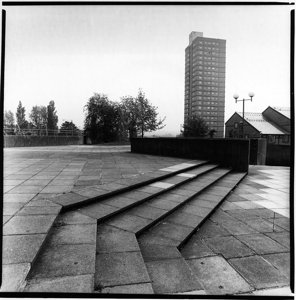
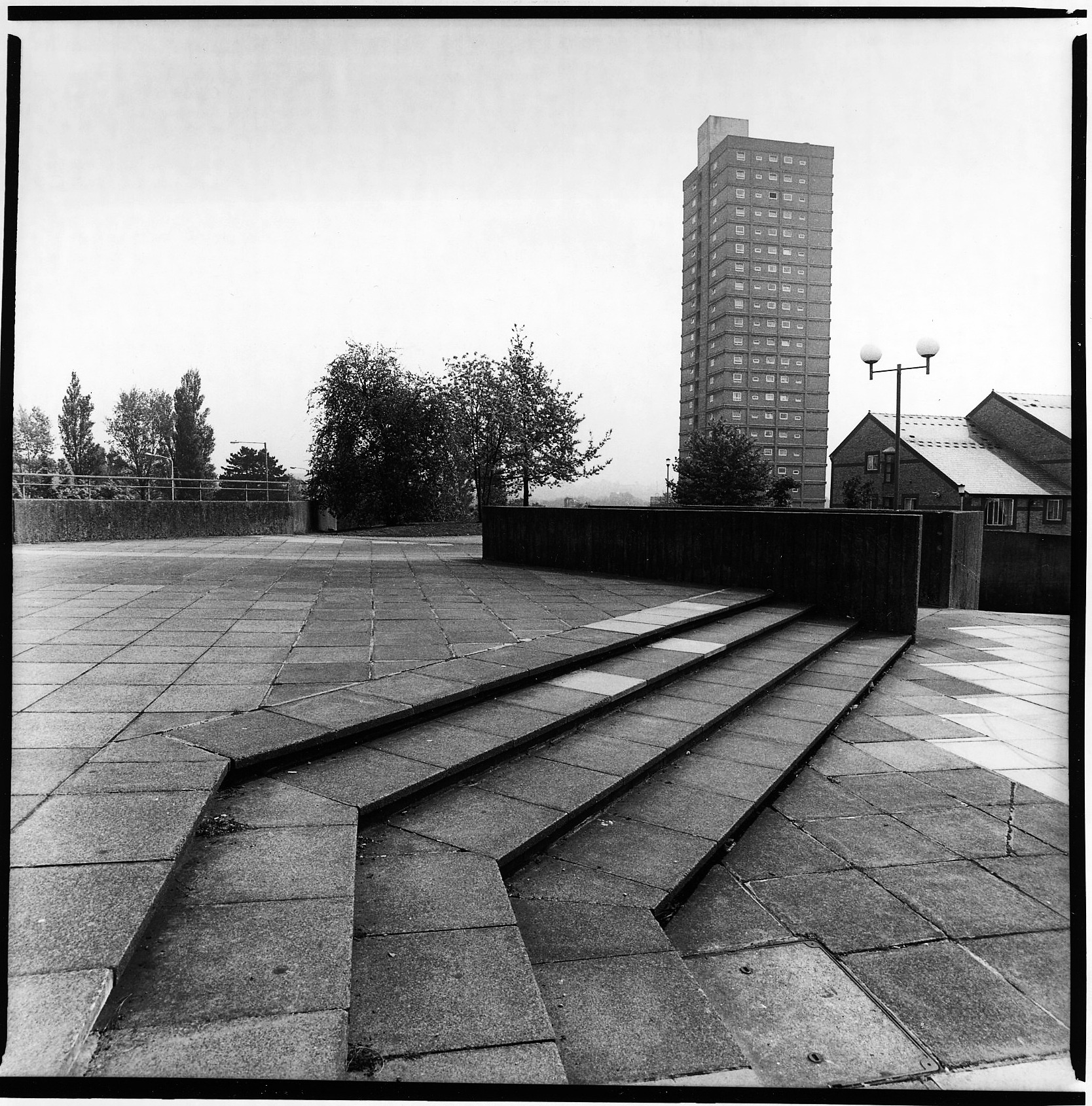
For Rob Meighen the New Towns began on his doorstep. In 1998, while studying documentary photography at Newport, he set out to photograph Cwmbran. He was fascinated by the idea that a whole town could be conceived, planned and built from nothing, and he chose to work in a cool, detached way: a medium format camera and slow black-and-white film, recording every detail as if re-examining the architects’ plans. The approach drew on the New Topographics photographers, among them Lewis Baltz, Robert Adams and Stephen Shore, and their deadpan record of a man-altered landscape.
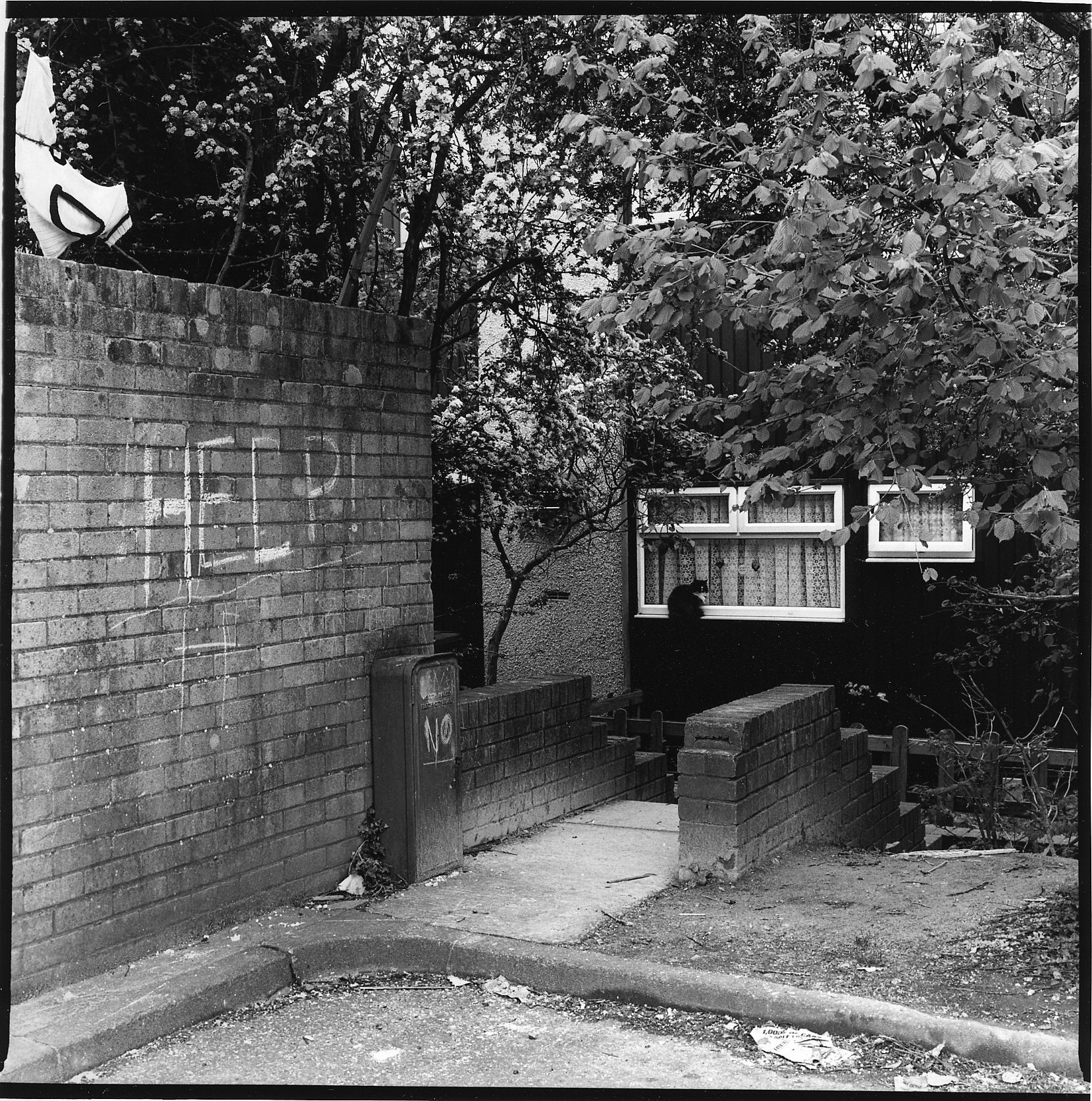
The project turned up something the plans had not shown. To photograph in the town centre, Meighen had to negotiate permission, because the centre had been sold to a private company when the Development Corporation was wound up in 1988. Streets and squares that worked as the shared heart of a community were managed as a commercial asset. That raised a question which ran through the work that followed: what makes a place public, and who decides how it is used?
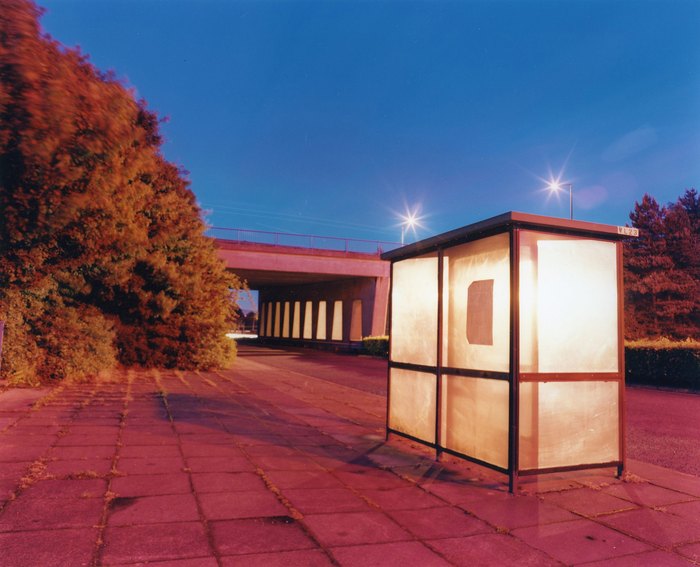
Urban Utopia (1998–2001) widened the enquiry to Skelmersdale, Warrington, London and Newport: estates, walkways, underpasses and road schemes built on the belief that planned architecture could make everyday life better. By the late 1990s much of it felt hard and inhuman, its open spaces built for crowds that never came and its routes designed around the car. Meighen worked at dusk, making long exposures on slow, daylight-balanced Fuji film and letting reciprocity failure shift the colour where different light sources met. Under that light the planting around the concrete glows, and something of the original promise becomes visible again.
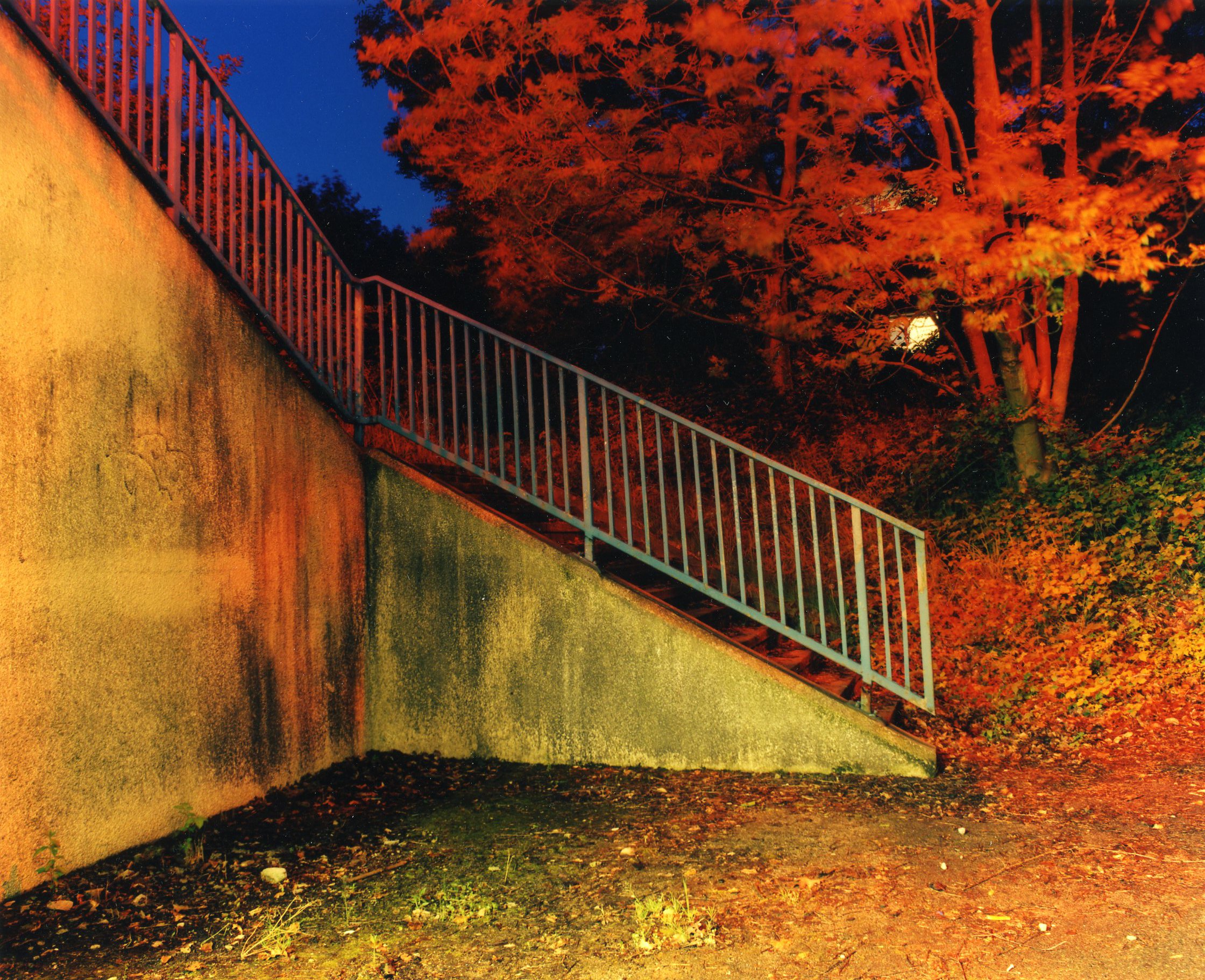
The work was shown in 2001 at the Open Eye Gallery, Liverpool, in Nocturnes, and prints from the series are held in the Open Eye Gallery Archive and by Arts Council England.
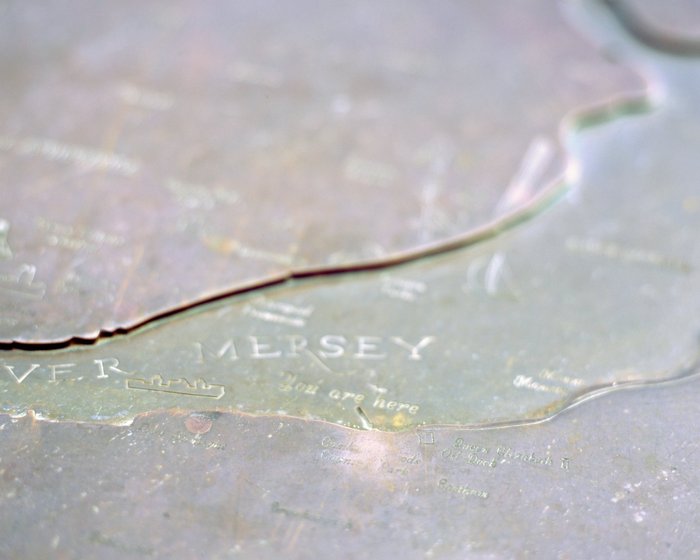
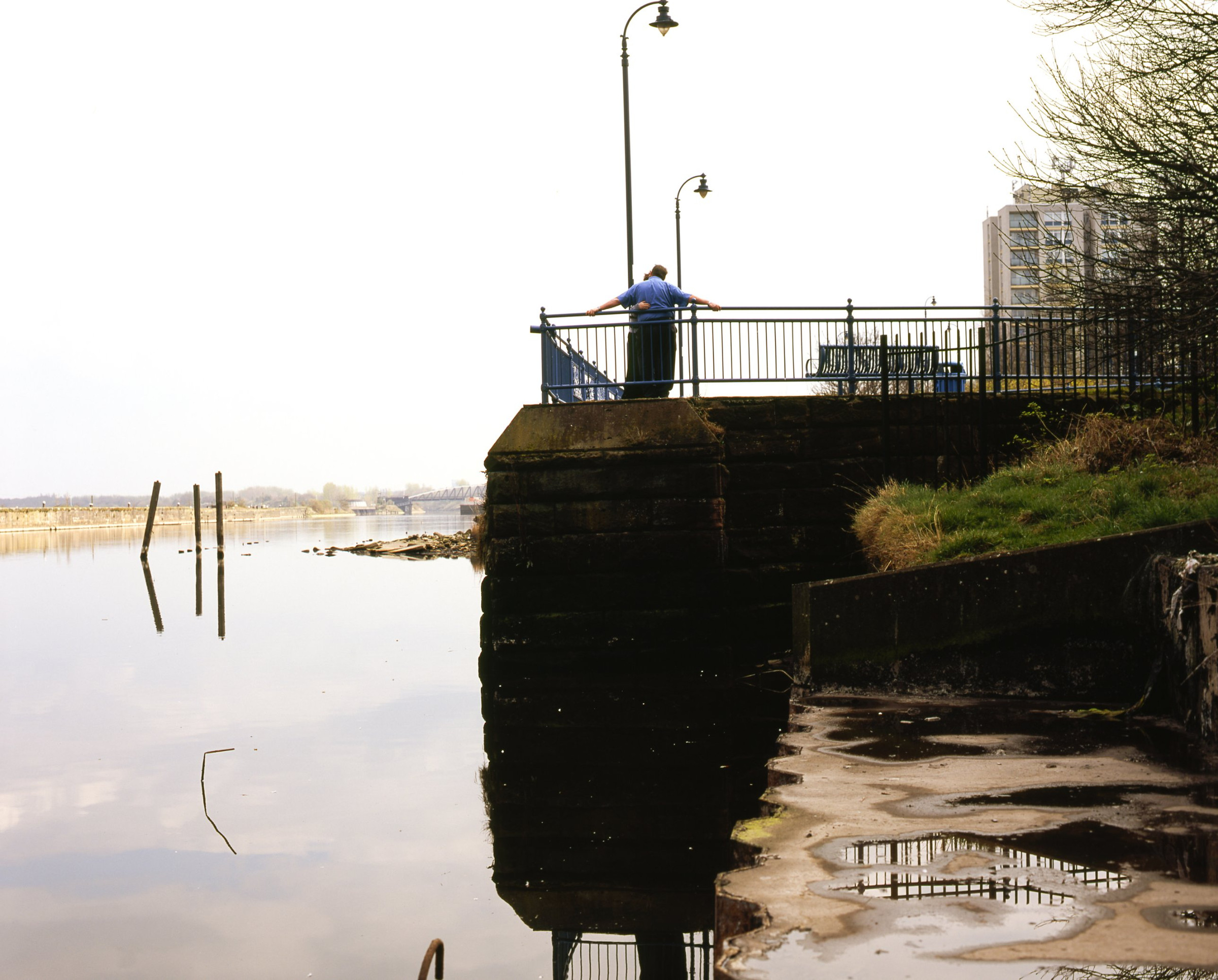
Not every experiment lasted long enough to be photographed. At Runcorn, James Stirling’s Southgate Estate, some 1,500 homes in deck-access blocks linked by walkways to the new town centre, was completed in 1977 and demolished between 1990 and 1992. When Meighen returned to Runcorn for Strategic Views (2008–2010), walking the viewpoints along the Mersey, the New Town had become one layer among many in a post-industrial landscape: less a utopia in waiting than a place living with the consequences of being planned.
The idea has now come back. In July 2024 the government set up a New Towns Taskforce. Its final report, published in September 2025, recommended twelve locations in England, and in March 2026 a draft programme was put out to consultation. The new towns are promised as masterplanned, sustainable communities in which housing, transport and amenities are planned together, which is much the same promise the post-war planners made.
Meighen’s photographs make no case for or against that promise. What they record is how it looked a generation or two later: the concrete and the planting, public space in private hands, and walkways built for people who are mostly absent from the frame. As the next New Towns are drawn up, they are a reminder that the plan is only the beginning, and that the towns are finally made by the people who come to live in them.
Sources
- New towns — UK Parliament, Living Heritage
- Stephen V. Ward, ‘An essay in civilisation’? Stevenage and the post-war New Towns programme — Angles
- Cwmbran — Town and Country Planning Association
- Skelmersdale — Town and Country Planning Association
- Southgate Housing, Runcorn — RIBApix
- Stirling in Runcorn — The Modernist
- Expert Taskforce recommends locations for new towns — GOV.UK, September 2025
- New Towns draft programme — GOV.UK, March 2026